
Can the meeting between Trump and Netanyahu break the deadlock in Gaza ceasefire negotiations?
- July 7, 2025
- Posted by: Macro Global Markets
- Category: News

On the early morning of July 7th local time, the first round of ceasefire negotiations in Gaza ended without any results in Doha, Qatar. The Israeli negotiation team failed to reach a ceasefire agreement with Hamas due to a lack of sufficient authorization.Meanwhile, Israeli Prime Minister Netanyahu departed for the United States on the 6th and plans to meet with US President Trump on the evening of the 7th to discuss issues such as the Gaza ceasefire, Iran, and normalization of relations with Arab countries. The market is highly concerned about whether this meeting will release a breakthrough signal, especially whether Trump will make concessions to Israel on tariff policies, military aid, and other aspects.
1、 Cease fire negotiations blocked: Israel’s insufficient authorization and divergent positions
The core obstacle to this negotiation lies in the limitations of the Israeli negotiating team’s authority. According to Palestinian sources, Israeli representatives can only discuss the mechanism for distributing humanitarian supplies and have no authority to engage in substantive consultations on core issues such as ceasefire deadlines and the release of detainees. The ceasefire plan proposed by Qatar requires Hamas to release 10 Israeli detainees and return 18 bodies within 60 days, while Israel needs to release multiple Palestinian detainees. However, Israel insists on retaining the right to restart military operations, while Hamas demands a complete ceasefire as a prerequisite, and the differences between the two sides on the nature of the ceasefire are difficult to reconcile.
The Netanyahu government is facing strong demands from the public for the immediate release of detainees, but also needs to balance the hardline stance within the ruling coalition towards the “complete elimination” of Hamas. Hamas, on the other hand, has exhausted its resources due to prolonged warfare and urgently needs to exchange a ceasefire for humanitarian aid, but lacks trust in Israel.
2、 Trump and Netanyahu Meeting: Geopolitical Game and Policy Compromise
This meeting is the third meeting between the two within six months, with the market focusing on three major areas:
Specific terms of the Gaza ceasefire agreement: Trump may pressure Israel to accept the Qatar proposal in exchange for US support in areas such as tariff exemptions and military equipment supply. But according to Israeli media reports, Israel has clearly rejected Hamas’ demand for a “permanent ceasefire” and is only willing to accept a temporary ceasefire in stages.
Iran nuclear issue and regional security: Trump plans to push for a “permanent agreement” with Iran, demanding concessions from Israel on issues such as nuclear facility inspections and missile range restrictions. This move may trigger a strong backlash from right-wing political parties in Israel, and Netanyahu may demand that the United States increase military aid to Israel in exchange.
Tariff Policy and Economic Game: Despite Netanyahu’s promise to eliminate trade barriers between Israel and the United States, Trump has not clarified whether to grant Israel tariff exemptions. According to the US plan, tariffs on countries that have not reached an agreement will be restored to April levels on August 1st, and Israel may face a 17% import tariff.
3、 Federal Reserve Policy Expectations and US Dollar Credit Risk
The minutes of the Federal Reserve’s June meeting, released on Thursday, July 10th, will serve as a key catalyst for the market. According to CME’s “Federal Reserve Watch”, the probability of keeping interest rates unchanged in July is 95.3%, and the probability of a 25 basis point rate cut in September has risen to 66.2%. Despite strong non farm payroll data in June, the lagged impact of tariff policies on inflation may force the Federal Reserve to cut interest rates twice this year. If the meeting minutes release hawkish signals, the US dollar index may rebound, suppressing the short-term performance of gold; On the contrary, if the risk of economic downturn is mentioned, the expected increase in interest rate cuts will boost gold prices.
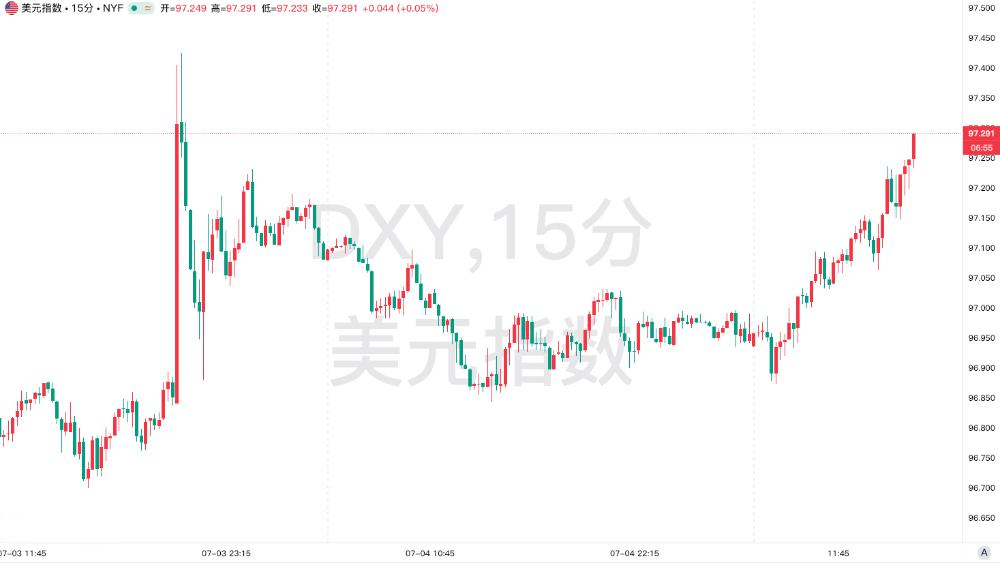
In the long run, the cracks in the US dollar credit system continue to widen. The proportion of US federal debt to GDP has reached 125%, the share of the US dollar in global foreign exchange reserves has decreased from 71% in 2000 to 58%, and the proportion of gold reserves has increased from 10% to 13%. Russia, Iran and other countries are accelerating the promotion of a gold local currency settlement system, further weakening the position of the US dollar and providing strategic support for gold.
In the short term, the progress of Gaza ceasefire negotiations, the outcome of Trump’s meeting with Netanyahu, and the minutes of the Federal Reserve meeting will dominate the volatility of gold. If the geopolitical situation worsens further, gold prices may rise to $3350; If a ceasefire agreement is reached or the Federal Reserve sends a hawkish signal, gold may drop below the $3300 mark.
Risk warning: escalation of geopolitical conflicts, unexpected tightening of Federal Reserve monetary policy, uncertainty in tariff policy. This article represents personal opinions only and does not constitute investment advice.




 English
  Chinese
  Vietnamese