
Cryptocurrency and gold: emerging forces and ancient trust in the global financial system
- January 6, 2025
- Posted by: Macro Global Markets
- Category: News
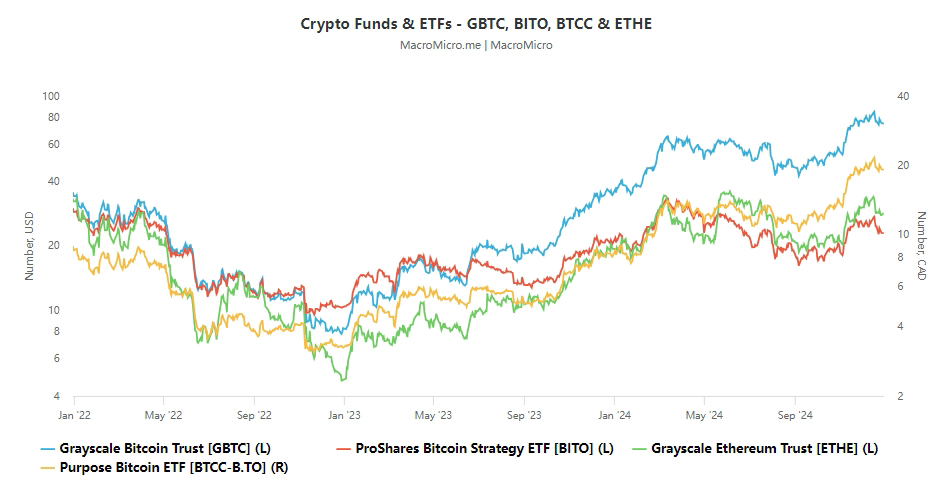
Against the backdrop of uncertainty and declining trust in the current global financial system, we are seeing two very different asset classes experiencing very different fates – cryptocurrencies and gold . Mary Daly, president of the Federal Reserve Bank of San Francisco, has proposed that cryptocurrencies should be considered an independent asset class, rather than a traditional asset like gold. Daly believes that the complexity of cryptocurrencies requires us to deeply understand and define their properties, which may be a currency, a medium of exchange, or a store of value. She emphasized that although cryptocurrencies sometimes exhibit gold-like properties, they are not equivalent to gold.
Meanwhile, Federal Reserve Chairman Jerome Powell viewed Bitcoin as a speculative asset, similar to gold, but noted that it is extremely volatile and is not used as a method of payment or a store of value. Despite this, enthusiasm in the cryptocurrency market has not diminished. Since Trump’s election, Bitcoin prices have risen sharply, breaking through the $100,000 mark and rising 106% so far this year. Related stocks such as Coinbase and Robinhood have also performed well, rising 45% and 204%, respectively. In addition, some entities that traditionally prefer stocks and bonds have also begun to invest in cryptocurrencies, showing the market’s bullish momentum for digital assets.
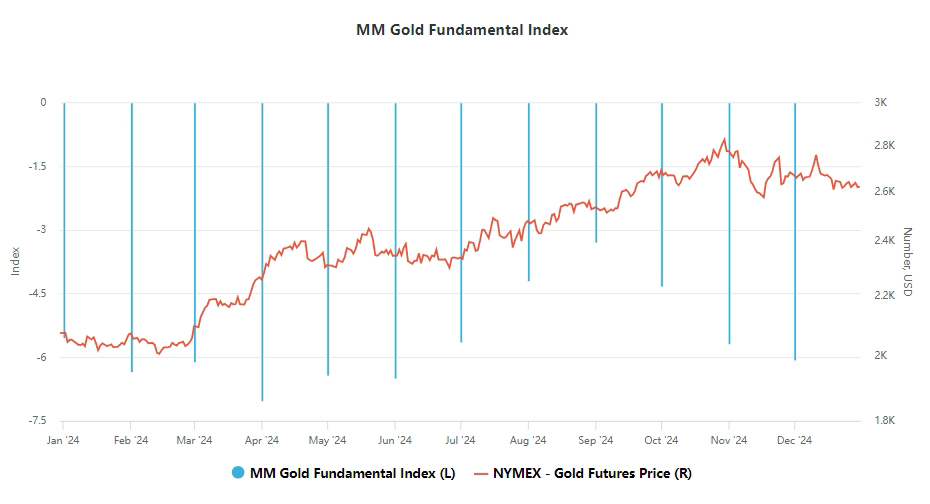
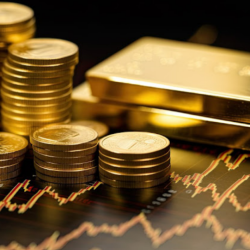
At the other end of the global financial system, central banks and speculators are rushing to hoard gold. This trend is partly due to the decline in trust in the global order caused by war, ideology and protectionism. Developing countries are particularly active in hoarding gold to prevent the collapse of the global financial system dominated by the United States and Europe. Gold prices have hit new highs this year, and Goldman Sachs predicts that by the end of next year, the price of gold may exceed $3,000.
Central bank purchases are a core driver of gold’s price rise, especially those that are concerned about possible future U.S. sanctions. Central banks in China, Russia, the Middle East, Central Asia, and India are actively buying gold. Countries such as Poland and Hungary are also increasing their gold reserves to enhance national confidence and financial stability. This trend is not only related to fears of hostilities and sanctions, but also to the growing debt burden of the United States and Europe and the declining reliability of the global financial order.
Gold’s neutrality and immutability make it a suitable anchor for the parallel financial system being established, one that the United States cannot dominate or manipulate. Western policymakers are slowly waking up to this risk, and the BRICS and other countries are pushing for currency diversification and less reliance on U.S. dollar assets. This rebalancing process will be long, but central banks in advanced economies and BRICS countries are likely to continue buying gold, even if they hold off on buying when prices are high.
In times of uncertainty and declining trust in institutions, people’s desire for reliability is even stronger, which is reflected in the scramble for gold. Gold is seen as a global asset, and people know that it will be accepted by others. As people become skeptical about the value of other assets, including the dollar, the value of gold increases. Gold has always been a symbol of trust, and for central banks, it is the last resource, an asset that everyone knows you have.
As the global financial system continues to evolve, cryptocurrencies and gold, as two distinct asset classes, each play an important role. Cryptocurrencies, with their decentralized and technologically innovative characteristics, are gradually changing our traditional perception of money and assets. Despite the challenges of regulation and market volatility, the potential and influence of cryptocurrencies cannot be ignored, and they may have a place in the future financial world. The views of San Francisco Fed President Mary Daly emphasize the need for a deep understanding and definition of cryptocurrencies, which reflects the financial community’s cautious attitude towards this emerging asset class.
At the same time, gold, as a long-standing safe-haven asset, has shown its irreplaceable value amid uncertainty and trust crisis. The gold purchases of central banks around the world are not only a concern about the current financial order, but also a preparation for possible changes in the future. The hoarding of gold reveals the pursuit of stability and trust in the global financial system, especially against the backdrop of the growing debt burden in the United States and Europe.
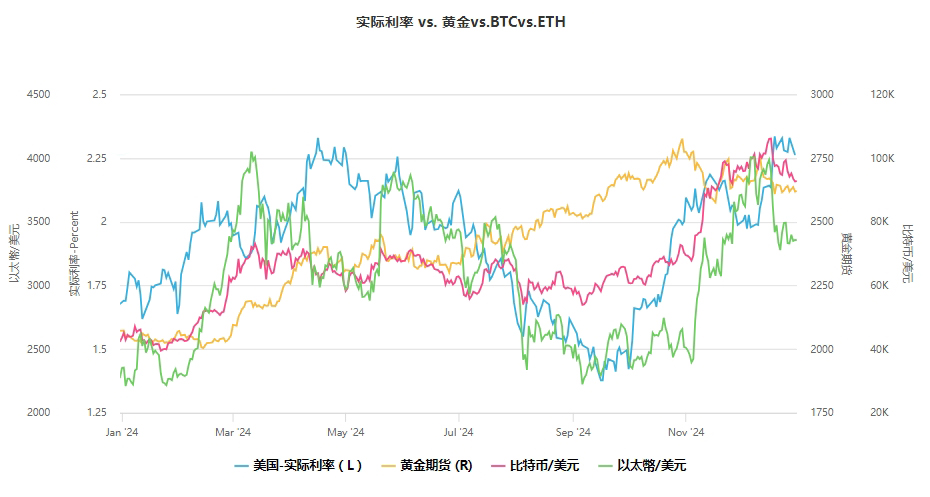
In summary, the development and changes of cryptocurrencies and gold reflect the complexity and dynamism of global financial markets. On the one hand, the rise of cryptocurrencies challenges the traditional financial system and foreshadows possible changes; on the other hand, the continued demand for gold highlights the global desire for stability and trust. The development trends of these two assets not only have an impact on investors’ asset allocation, but also have far-reaching implications for global financial policies and economic stability. In the future, with the advancement of technology and changes in the international political and economic landscape, the roles of cryptocurrencies and gold may continue to evolve, and global financial markets will continue to adapt to these new developments.


 English
  Chinese
  Vietnamese