
The Middle East war continues to escalate! Israel vows to fight to the end, Trump denies ceasefire
- June 18, 2025
- Posted by: Macro Global Markets
- Category: News

Although Iran announced the resumption of dialogue with the International Atomic Energy Agency and market concerns about the blockade of the Strait of Hormuz temporarily subsided, the Israeli Ambassador to the United Nations issued a statement early on the 17th stating that “negotiations are too early and Israel will fight to the end,” reigniting expectations of geopolitical risks. At the same time, US President Trump denied on the morning of the 17th that “emergency return to the US is a ceasefire” after shortening the G7 summit itinerary and returning to the US, emphasizing that “the US is committed to ensuring Iran’s denuclearization”, further exacerbating market uncertainty.
1、 The situation in the Middle East: a dual game between Israel’s strong stance and Trump’s policies
1. Israel’s’ war logic ‘and international community differences
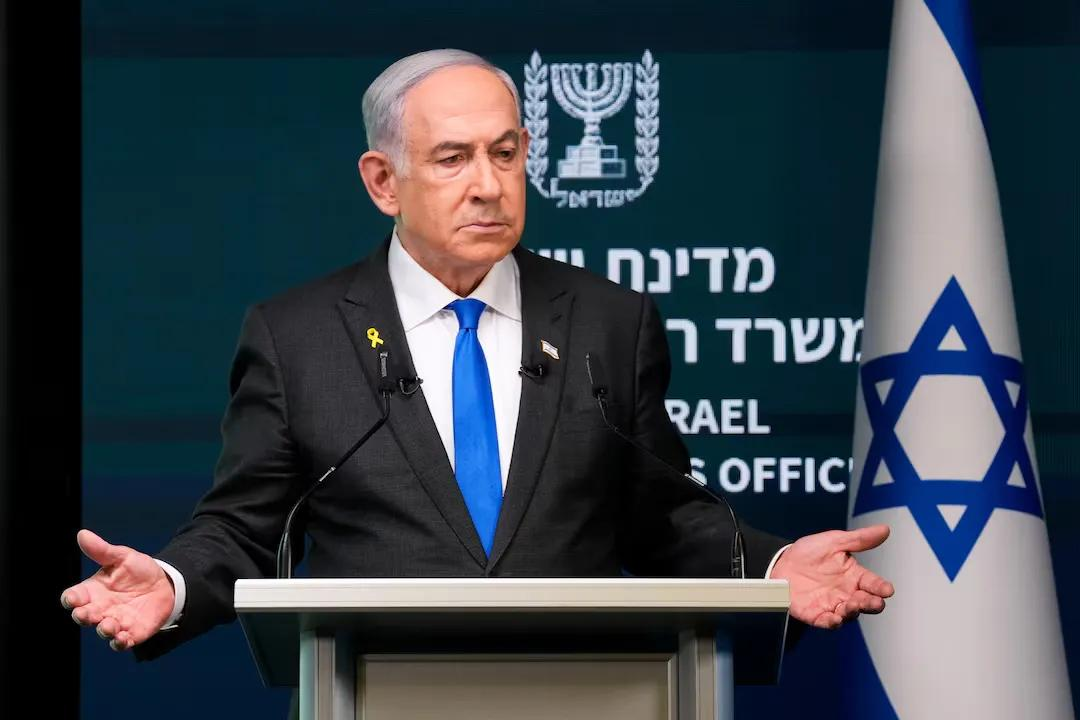
The strong statement by the Israeli ambassador highlights its strategic intention to “suppress Iran’s nuclear capabilities through military means”. Despite Iran’s announcement on the 17th to suspend some missile production activities and restart nuclear negotiations, Israeli Prime Minister Netanyahu stated at a cabinet meeting that “Iran’s commitments are worthless and must be forced to completely abandon its nuclear program through military pressure. This position is in sharp contrast to that of the EU: when President von der Leyen of the European Commission spoke with Netanyahu on the 16th, he urged Israel to “immediately allow humanitarian aid to enter Gaza” and stressed “the necessity of resolving the Iranian nuclear issue through negotiations”.
2. Trump’s’ maximum pressure ‘and internal disagreements within the G7
Trump’s refusal to sign a joint statement calling for a ceasefire between Israel and Iran during the G7 summit has sparked dissatisfaction among European allies. French President Macron criticized that “unilateral actions will only exacerbate conflicts,” while Trump responded by saying that “Europe should take on more responsibility for Middle East security. After returning to the United States on the 17th, Trump reiterated at a White House briefing that “the United States will not directly intervene militarily, but will isolate Iran through sanctions and diplomatic means. This policy path not only continues its “America First” diplomatic style, but also leaves policy uncertainty space for the market.
3. Potential risk points for conflict escalation
There are two major flashpoints in the current situation in the Middle East: one is whether Israel’s airstrikes on Iran’s nuclear facilities have expanded to civilian targets; The second question is whether Iran has carried out “proxy retaliation” by supporting Hezbollah in Lebanon or Houthi armed groups in Yemen. If the conflict spreads to the Strait of Hormuz, the risk of oil supply disruption may push up inflation expectations, thereby strengthening the safe haven nature of gold.
2、 The gold market: a battleground between geopolitical risks and policy expectations
On June 17th during the Asian trading session, spot gold continued its volatile trend from the previous trading day, with London gold prices fluctuating between $3400 and $3420, slightly down 0.3% from the previous trading day’s closing price, at $3412.5 per ounce.
1. Short term volatility: the tug of war between safe haven buying and profit taking
Despite the ongoing conflict between Iran and Iraq, gold failed to continue its upward trend on June 16th, mainly suppressed by three factors:
Technical callback demand: The daily RSI indicator has fallen from the overbought area to around 65, indicating a weakening of bullish momentum; The 4-hour chart shows a narrowing of the Bollinger Bands, with gold prices running below the mid track and short-term bears holding the upper hand.
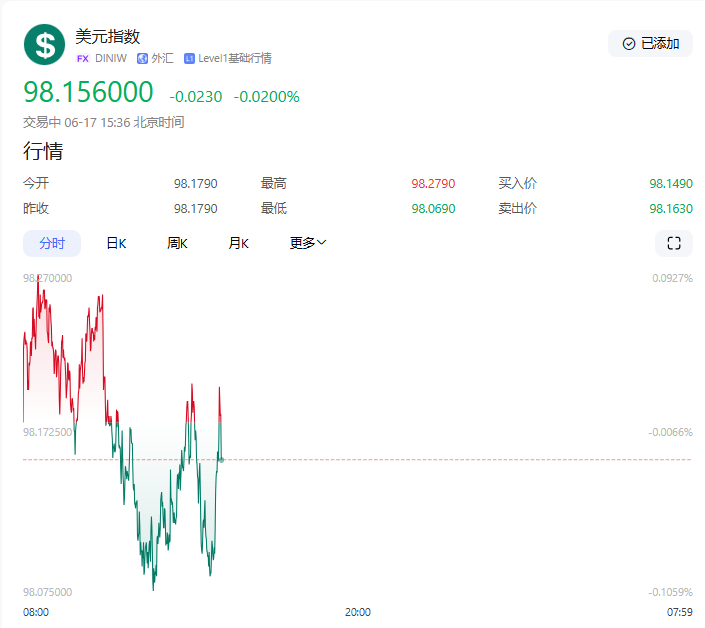
Federal Reserve policy expectations diverge: Market divergence intensifies over the June 19th Federal Reserve interest rate meeting. According to CME’s “Federal Reserve Watch”, the probability of keeping interest rates unchanged in June is as high as 99.6%, but the expectation of the number of interest rate cuts within the year has been reduced from two to one, and the US dollar index has slightly risen to 98.15, suppressing the rebound space of gold.
2. Medium – to long-term support: central bank gold purchases and de dollarization trend
Global central banks will continue to increase their holdings of gold in the first quarter of 2025, with China’s gold reserves increasing to 73.83 million ounces and Kazakhstan’s gold reserves growing by 0.4% month on month in May. The European Central Bank report shows that gold has surpassed the euro to become the world’s second-largest reserve asset, with central bank purchases exceeding 1000 tons in 2024. This structural demand provides long-term support for gold prices, and even if there is a short-term pullback, the downside space is relatively limited.
The current gold market is at a crossroads between geopolitical risks and Federal Reserve policy expectations. Israel’s tough stance and Trump’s policy path have intensified short-term volatility, but the long-term logic of central bank gold purchases and de dollarization still provides support for gold prices.



 English
  Chinese
  Vietnamese