
The rise and fall of gold prices, and the new views of major institutions on the gold market
- March 6, 2025
- Posted by: Macro Global Markets
- Category: News

Last week, gold prices fell
Last week, international gold prices experienced a significant decline, with the main contract price of New York Mercantile Exchange gold futures dropping by 3.55%, ending the previous nine week long uptrend. This is also the largest weekly decline in international gold prices since November last year. The domestic gold market has also been affected, and the retail prices of domestic consumer gold jewelry have been comprehensively lowered.
The main reasons for the sharp decline are the easing of geopolitical risks, the easing of the Russia Ukraine situation, the decrease in the intensity of the Israeli Palestinian conflict, and the decline in market demand for safe haven gold; The hawkish signal from the Federal Reserve emphasizes maintaining an interest rate range of 4.25% -4.5% to combat inflation, and the opportunity cost of holding gold increases in a high interest rate environment; Investors took profits, as the gold price continued to rise and accumulated a large number of profit taking positions, causing the market to sell off; And COMEX gold replenishment inventory and short-term premium factor reduction.
Gold prices have rebounded to over $2900 this week
On March 4th of this week, spot gold broke $2920 per ounce, rising for two consecutive days, and domestic brand gold store gold retail prices also generally rose.
The reasons for the pullback include rising risk aversion and market concerns that the Trump administration may take additional measures against gold in its comprehensive tariff plan, which has prompted US financial institutions and investors to buy a large amount of gold; Global central banks’ demand for gold purchases continues to increase their holdings of gold reserves, providing long-term support for gold prices; As well as a technical rebound, there is strong demand for a technical rebound in gold prices after a significant drop last week.
New perspectives of major institutions on the gold market
JPMorgan predicts that by the fourth quarter of 2025, gold prices may approach $3000 per ounce, believing that gold demand will continue to exist to hedge against inflation, geopolitical uncertainty, and potential changes in global monetary policy.
Goldman Sachs stated that gold, due to strong demand from central banks, will become an effective tool for hedging against tariffs and inflation risks. The price may rise by 8% this year and is expected to reach $3100 per ounce by the end of the year. If economic policy uncertainty persists, especially concerns about tariffs, gold prices may further rise to $3300 per ounce.
Xingye Research pointed out that the rapid rise in gold prices in the short term has accumulated a lot of profit opportunities. If the Ukrainian crisis ends or has a negative impact on gold prices, the long-term allocation value of gold remains significant.
Conclusion
In the coming months, the market will focus on core risk events such as US non farm payroll data, European Central Bank interest rate decisions, Canadian employment data, and minutes of the Reserve Bank of Australia meeting. Despite short-term adjustment pressure on gold prices, the allocation value of gold remains significant in the medium to long term. Investors should pay attention to current events and other data that affect the direction of gold in the current market environment, while being alert to short-term volatility risks and making reasonable judgments.
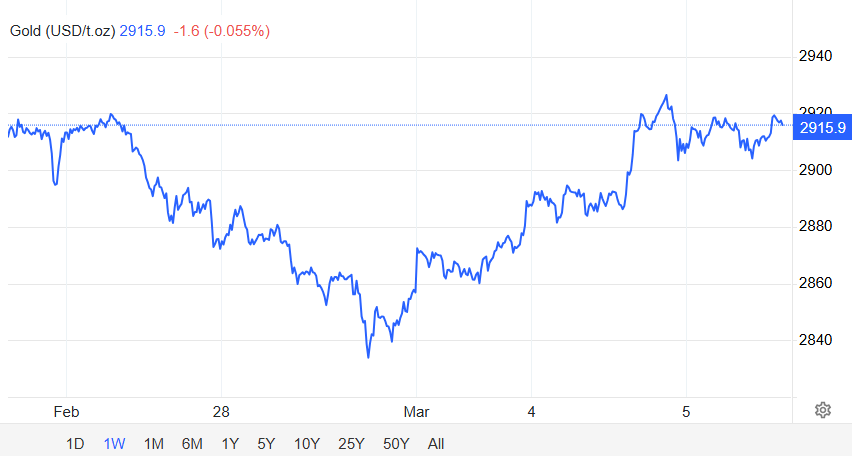
As of 3:00 PM Beijing time, the spot gold price is $2918.70 per ounce.
Trading risk warning: Any investment carries risks, including the risk of financial loss. This suggestion does not constitute specific investment advice, and investors should make decisions based on their risk tolerance, investment goals, and market conditions.


 English
  Chinese
  Vietnamese