
The two sides of the US economy – the dual test of slowing inflation and fiscal deficit
- March 14, 2025
- Posted by: Macro Global Markets
- Category: News

The U.S. economy is at a crossroads. On the one hand, inflation shows signs of slowing down, while on the other hand, the fiscal deficit continues to expand. These two forces are intertwined, outlining a complex and subtle economic picture.
Slowing inflation: a brief ray of hope?
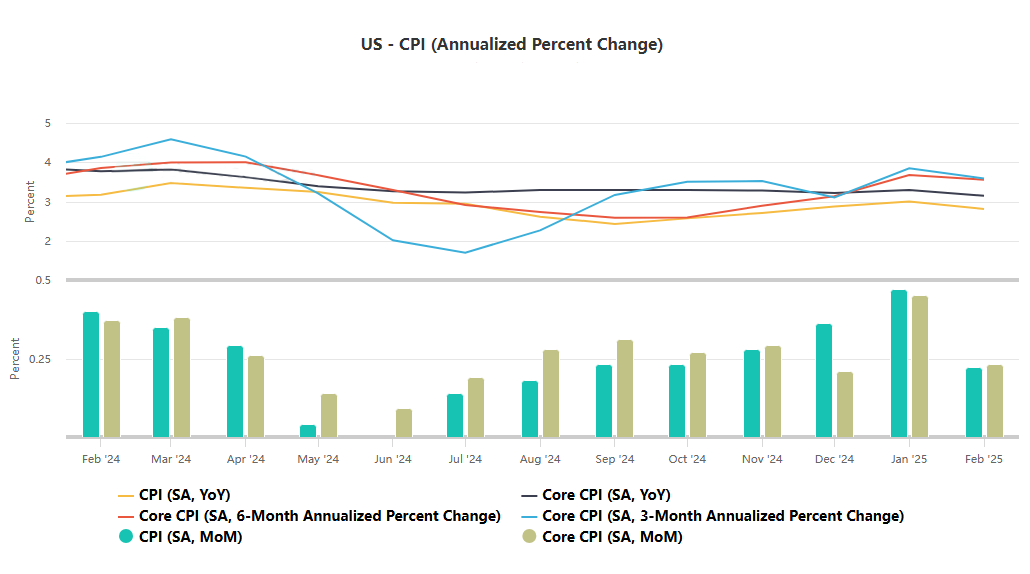
The US CPI inflation data for February brought a glimmer of hope to the anti-inflation process that has been going on for several months. Data from the Bureau of Labor Statistics showed that the CPI grew by only 0.2% month-on-month in February, lower than the expected 0.3%, hitting a new low since October last year. The year-on-year growth rate also slowed to 2.8%, the lowest since November last year, lower than the previous value of 3% and the market expectation of 2.9%. The core CPI also showed a slowing trend, with the month-on-month growth rate falling from 0.3% last month to 0.2%, the lowest since December last year. The year-on-year growth rate also slowed to 3.1%, lower than the previous value of 3.3% and the market expectation of 3.2%, the lowest since April 2021.
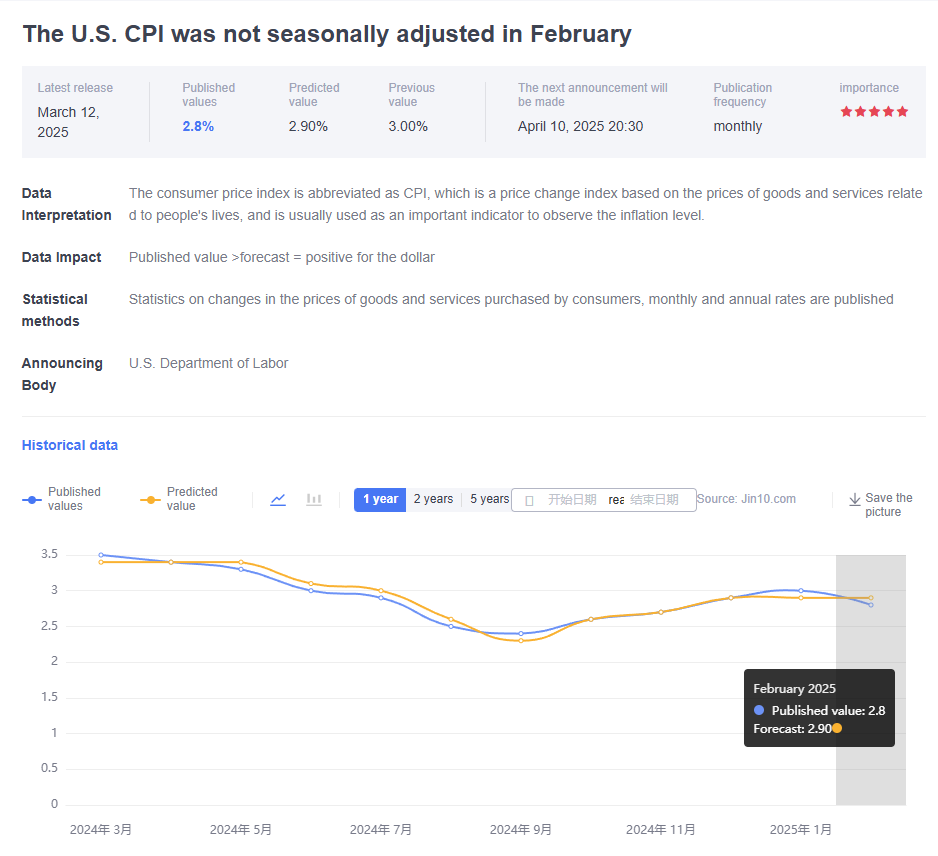
Housing prices have been the biggest driver of U.S. inflation, but housing inflation rose 0.28% this month, down from 0.37% in January. However, health care and used car prices rose more, while the cost of airline tickets and new cars fell. Egg prices rose again in February, increasing by 10% in the month and 58% for the whole year, becoming an important factor driving CPI growth. The news of slowing inflation caused ripples in the market. Gold rose by $6 in the short term, hovering around $2,920. The U.S. dollar index fell in the short term and then rose strongly, stabilizing around 103.6.
Despite this, multiple indicators still show that there is a risk of inflation re-emerging. The series of tariffs introduced by Trump are expected to increase prices of goods ranging from food to clothing, which will test the resilience of consumers and the overall economy. In a speech to Congress last week, Trump described price increases caused by expected tariffs as “a little disturbance that the country should be able to overcome,” but uncertainty about his trade policy has contributed to a recent stock market plunge and reignited recession fears.
Fiscal deficit: a ship that is hard to ignore
While there is gradually some light at the end of the tunnel on the inflation issue, the US fiscal deficit problem is like a giant ship that cannot easily change its course. The latest data from the U.S. Treasury Department showed that federal government spending increased to a record $603 billion in February, while tax revenue was only $296 billion, resulting in a budget deficit of $307 billion that month. This means that the United States spent more than twice as much as it revenue in February, and the deficit in February this year was close to a record high, second only to the post-epidemic impact in 2021, pushing the total cumulative deficit in 2025 to 1.147 trillion US dollars, accounting for 38% of the total US spending in fiscal year 2025.
Musk’s Department of Government Efficiency (DOGE) claims to have saved more than $100 billion, but only a few departments saw spending declines in the first full month of the new administration. Spending increased by $40 billion, or 7%, compared with the same period last year. At the current rate of development, it will take several hundred years for DOGE to have a real impact.
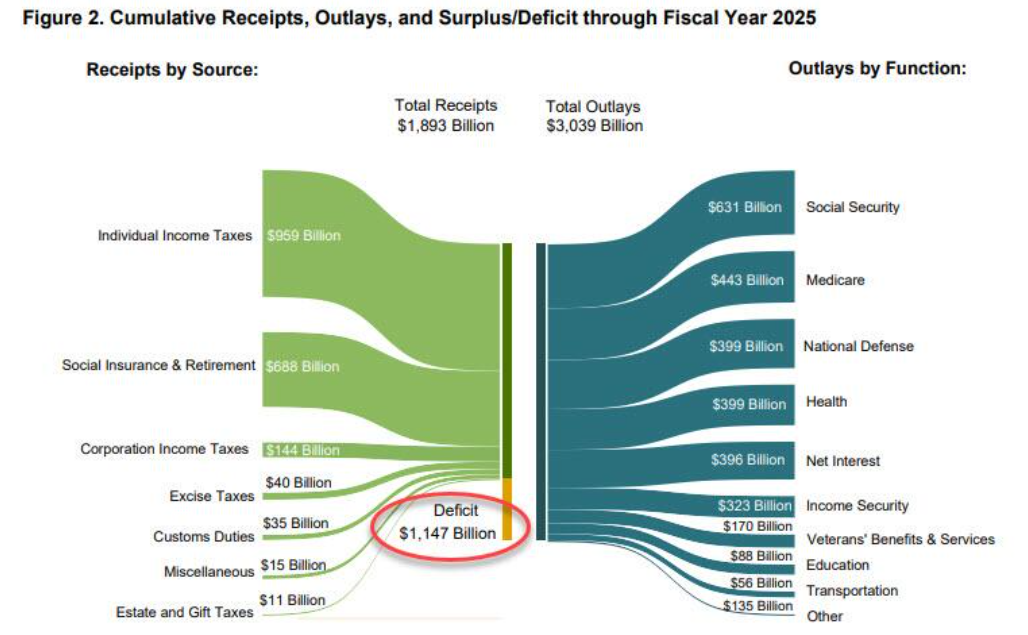
Although Secretary of State Rubio has overseen cuts at USAID, with monthly spending halved to $226 million from $547 million a year earlier, and his agency’s core budget slashed to $1.6 billion from $1.7 billion, the savings pale in comparison to the overall deficit. A 6% increase in Social Security spending would require an additional $8 billion in spending, and a 3% increase in health care spending would increase spending by $5 billion, all spending items that have been barely touched in terms of spending cuts.
The dual game of inflation and finance
The slowdown in inflation has brought a respite to the US economy, but the fiscal deficit problem has continued to loom, becoming a major hidden danger to the sustainable development of the economy. In the future, the US economy will move forward amidst the game between these two forces. The future direction of inflation is full of uncertainty. Although current data shows that inflation is slowing, factors such as Trump’s tariff policy, changes in the global economic situation and supply chain issues may have new impacts on inflation. The Federal Reserve will face difficult choices in its interest rate policy, having to consider the potential risk of a rebound in inflation while balancing economic growth and job market stability.
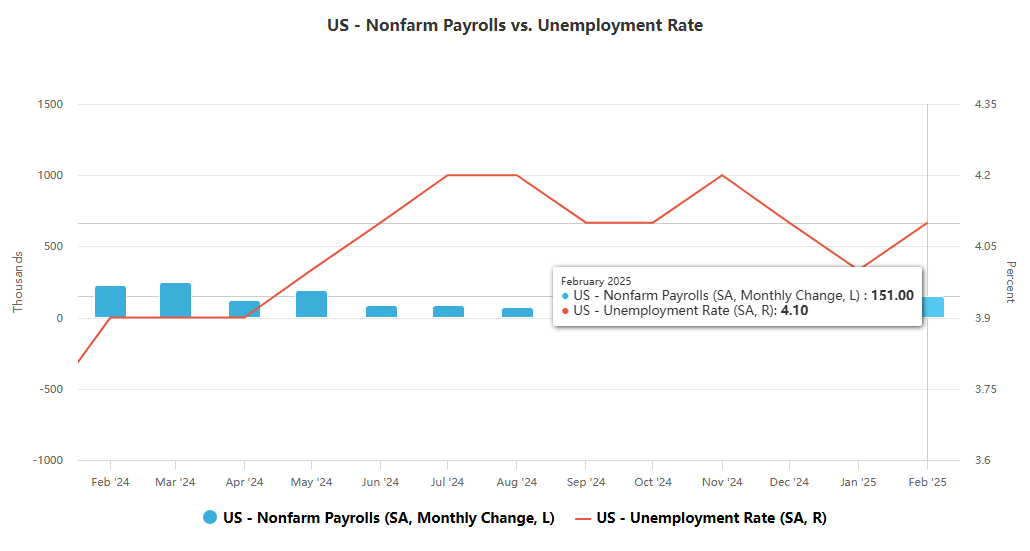
On the other hand, the fiscal deficit problem needs to be addressed urgently. DOGE, led by Musk, has achieved limited success in cutting spending, and more forceful measures and broader consensus will be needed to promote fiscal reform in the future. At the same time, the US government needs to find effective ways to save on large spending items such as social security and health care to ease fiscal pressure. How to find a balance between inflation and fiscal deficit will determine whether the US economy can achieve stable and sustainable development.
This is not only a challenge to government policies, but also a test of market confidence. The future direction of inflation and the path to resolving the fiscal deficit are full of uncertainty, but what is certain is that the balance between the two will determine the short-term stability and long-term sustainability of the US economy. The future of the U.S. economy depends not only on the wisdom and determination of policymakers, but also on the patience and confidence of the market. How to win this economic game will be a major issue facing the US economy.




 English
  Chinese
  Vietnamese