
Trump warns at NATO summit that conflict with Iran may erupt again, leading to heightened risk aversion in the gold market
- June 26, 2025
- Posted by: Macro Global Markets
- Category: News
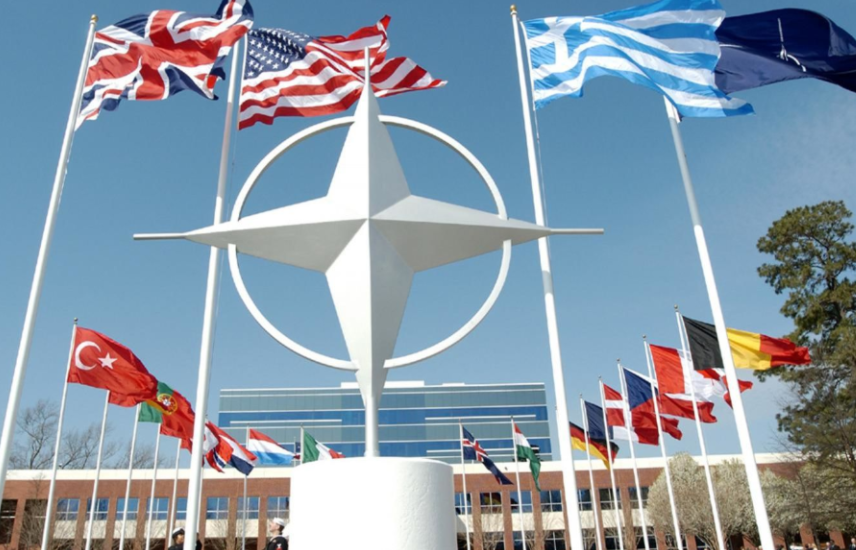
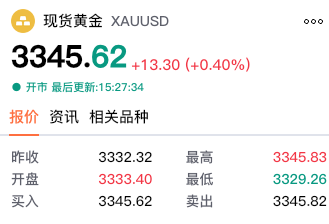
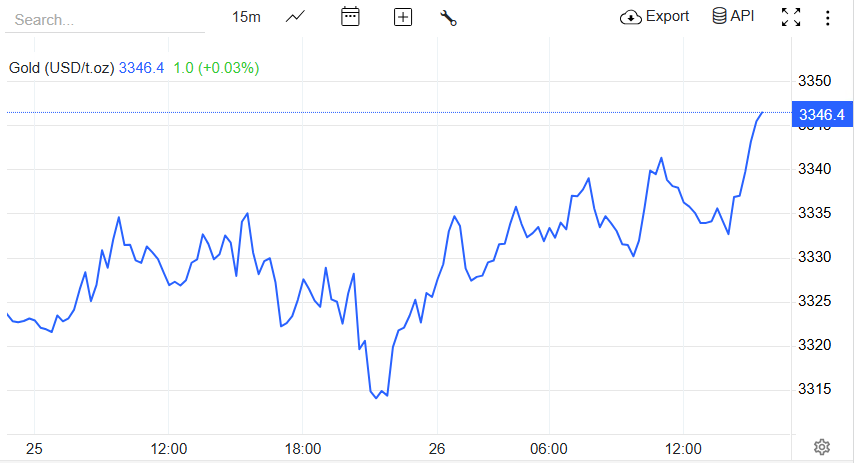
On June 25th local time, US President Trump made a heavyweight statement during the NATO summit, stating that “the conflict between Israel and Iran may erupt again, perhaps soon”. This statement shattered market expectations of a easing of tensions in the Middle East and triggered global financial market volatility. As of the morning session of June 26th in the Asian market, spot gold prices quickly rebounded from a two-week low of $3322.93 per ounce to around $3345.62, an increase of 0.4%, while the US dollar index fell to 97.46, a new low since March 2022, providing dual support for gold prices.
1、 The background of Trump’s remarks and geopolitical games
Trump’s warning is not groundless. Although he announced on June 24th that Israel and Iran had reached a ceasefire agreement, the actual situation is still turbulent: the Israeli military continues to airstrike a radar facility in Tehran after the ceasefire, and Iran responds by launching ballistic missiles at Israel. Trump emphasized at the NATO summit that the United States has “completely destroyed” Iran’s nuclear facilities and warned that if Iran restarts its uranium enrichment program, it will launch another attack. He also revealed that US and Iranian officials will hold talks next week, but repeatedly stated that such agreements are “unnecessary”.
This “soft hard” strategy reflects the strategic contradiction of the United States in the Middle East: on the one hand, it uses military deterrence to contain Iran’s nuclear program, and on the other hand, it attempts to exert pressure through negotiations. However, the Iranian Ministry of Foreign Affairs has explicitly denied reaching any ceasefire agreement, stating only that “if Israel stops its aggression, Iran has no intention of continuing to retaliate”. This difference in stance makes the situation full of uncertainty, and market concerns about the possibility of conflict escalating at any time continue to ferment.
2、 Potential Risks and Market Impact of the Iran Iraq Conflict
1. Re pricing of geopolitical risk premium
If the Iran Iraq conflict erupts again, it may trigger multiple chain reactions:
Energy supply crisis: Iran’s parliament has considered closing the Strait of Hormuz, a global oil transportation “throat”. If blocked, Brent crude oil prices could soar to $120-130 per barrel, exacerbating global inflationary pressures.
Risk of nuclear facility attack: Although the US airstrike on Iran’s Fordo nuclear facility has been described as “complete destruction” by the US, leaked intelligence shows that its underground parts have not been destroyed, and Iran may have secretly transferred its enriched uranium stockpile. If the conflict escalates, an attack on nuclear facilities could trigger broader regional unrest.
The proxy war is expanding: Iran supported Houthi armed groups, Hezbollah and other forces in Lebanon may join the conflict, leading to a complete loss of control over the situation in the Middle East.
These risks directly drive up the safe haven demand for gold. Historical data shows that within 8-20 trading days after a geopolitical crisis, the average increase in gold prices can reach 5.5%. The current stabilization of gold around $3300 partially reflects the market’s demand for hedging against the escalation of conflicts.
2. Instant response and capital flow in the gold market
The rebound of gold prices on June 26th is the result of multiple factors resonating:
The support of the weakening of the US dollar: The US dollar index has fallen to a four-year low, making gold more attractive to investors holding currencies such as the euro and pound.
Long term support for central bank gold purchases: The People’s Bank of China has increased its holdings of gold for seven consecutive months, with its holdings increasing to 73.83 million ounces, indicating the strategic allocation demand of institutional investors for gold.
However, there are differences in the market: some speculative funds withdrew from the gold market after the ceasefire agreement was announced, and on June 24th, gold ETF holdings decreased by 12.3 tons per day, while long-term investors gradually built positions around $3300. This’ long short game ‘maintains a volatile pattern in gold prices before data is released.
3、 Expert opinions and risk warnings
Institutional analysis: Michael Feroli, Chief Economist of JPMorgan Chase, pointed out that the escalation of the Middle East conflict may push up inflation expectations, and gold as an anti inflation tool will benefit.
Citigroup analysts predict that if the Strait of Hormuz is blocked, gold prices may break through $3400 per ounce, but remain bearish in the long run to the $2500-2700 range.
Yang Delong, Chief Economist of Qianhai Open Source Fund, believes that the weakness of the US dollar and the central bank’s purchase of gold will form long-term support, and the upward trend of gold in the medium and long term will remain unchanged.
Trump’s remarks at the NATO summit reignited market concerns about the Iran Israel conflict, highlighting gold’s role as a “crisis thermometer” once again. In the short term, the repricing of geopolitical risk premiums and the weakening of the US dollar provide support for gold prices, but the medium to long term trend still depends on Federal Reserve policies, geopolitical developments, and the global economic outlook.



 English
  Chinese
  Vietnamese