
Trump’s repeated tariff policies highlight the safe haven nature of the gold market
- March 10, 2025
- Posted by: Macro Global Markets
- Category: News
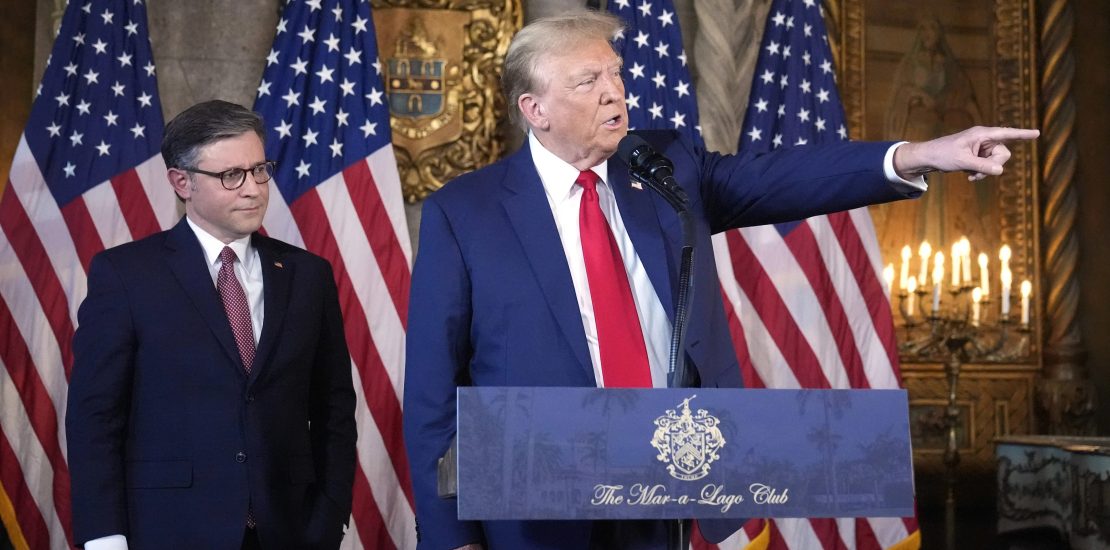
On March 6th local time, US President Trump signed a tariff amendment, announcing a temporary suspension of 25% tariffs on Canadian and Mexican goods that comply with the USMCA, with exemptions until April 2nd. This policy shift came just two days after its announcement on March 3rd that “tariffs will take effect on the 4th,” triggering severe turbulence in global financial markets. Gold, as a traditional safe haven asset, exhibits significant anti inflation and hedging characteristics in the face of policy uncertainty.
Mexican President Simbaum emphasized that during the suspension period, the Mexican side will synchronize the progress of drug control with the US every two weeks and plan to promote the upgrading of local industries. The International Monetary Fund warns that repeated US trade policies may lead to a 2.3% reduction in global trade volume, dragging down global economic growth by 0.5 percentage points.
Tariff game drives up demand for safe haven
The Trump administration’s repeated tariff policies, combined with previous decisions to impose tariffs on steel and aluminum products, have intensified market concerns about global supply chain stability. Data shows that the trade volume between the United States and Mexico accounts for nearly 30% of its total foreign trade, with key industries such as automobiles and energy bearing the brunt. This exemption covers major industrial products such as automobiles and machinery, but the Canadian potassium fertilizer tariff remains at 10%. It is worth noting that Trump has explicitly stated that the 25% tariff on steel and aluminum products will be implemented as originally planned on March 12th, and the exemption from car tariffs will not be extended after it expires on April 2nd. Canadian Finance Minister LeBron immediately announced the postponement of the second phase of retaliatory tariffs worth CAD 125 billion, after previously imposing tariffs on CAD 30 billion worth of US goods.
Affected by this, the international gold price broke through the integer mark of $2900 per ounce on March 3, the day when Trump confirmed the tariffs would take effect. The COMEX gold futures main contract closed at $2910.74 per ounce, up 1.8% from the previous week.
The reverse linkage between the US dollar and gold
The uncertainty of tariff policies has led to significant fluctuations in the US dollar index. On the day the tariffs came into effect on March 4th, the US dollar index fell 0.5% to 104.15, the lowest level in nearly three months. Due to the fact that gold is priced in US dollars, the weakening of the US dollar directly enhances its attractiveness to holders of other currencies. However, with the news of the temporary suspension of tariffs, the US dollar index briefly rebounded to 104.35, and gold prices fell under pressure to the range of $2900 per ounce.
The expectation of the Federal Reserve cutting interest rates further supports gold prices. The current market expects a cumulative interest rate cut of 75-100 basis points by 2025, with real interest rates falling to -1.2%. As a zero interest asset, the opportunity cost of holding gold decreases with the decrease of real interest rates, forming a sharp contrast with US dollar assets.
Conclusion
Although short-term tariffs have temporarily eased market sentiment, global geopolitical risks remain high. The continued escalation of geopolitical events such as the suspension of US military aid to Ukraine and tensions in the Middle East is driving global central bank demand for gold purchases.
At present, the gold market presents typical “policy market” characteristics, and Trump’s upcoming implementation of “equivalent tariffs” on April 2 has become a new focus. Analysis suggests that if tariff policies continue to escalate, gold prices are expected to break through the pressure level of $2930 per ounce; On the contrary, if the trade situation substantially eases, gold prices may face a technical correction. Investors need to closely monitor the movements of the Federal Reserve’s monetary policy and geopolitical evolution, and make reasonable investment judgments.
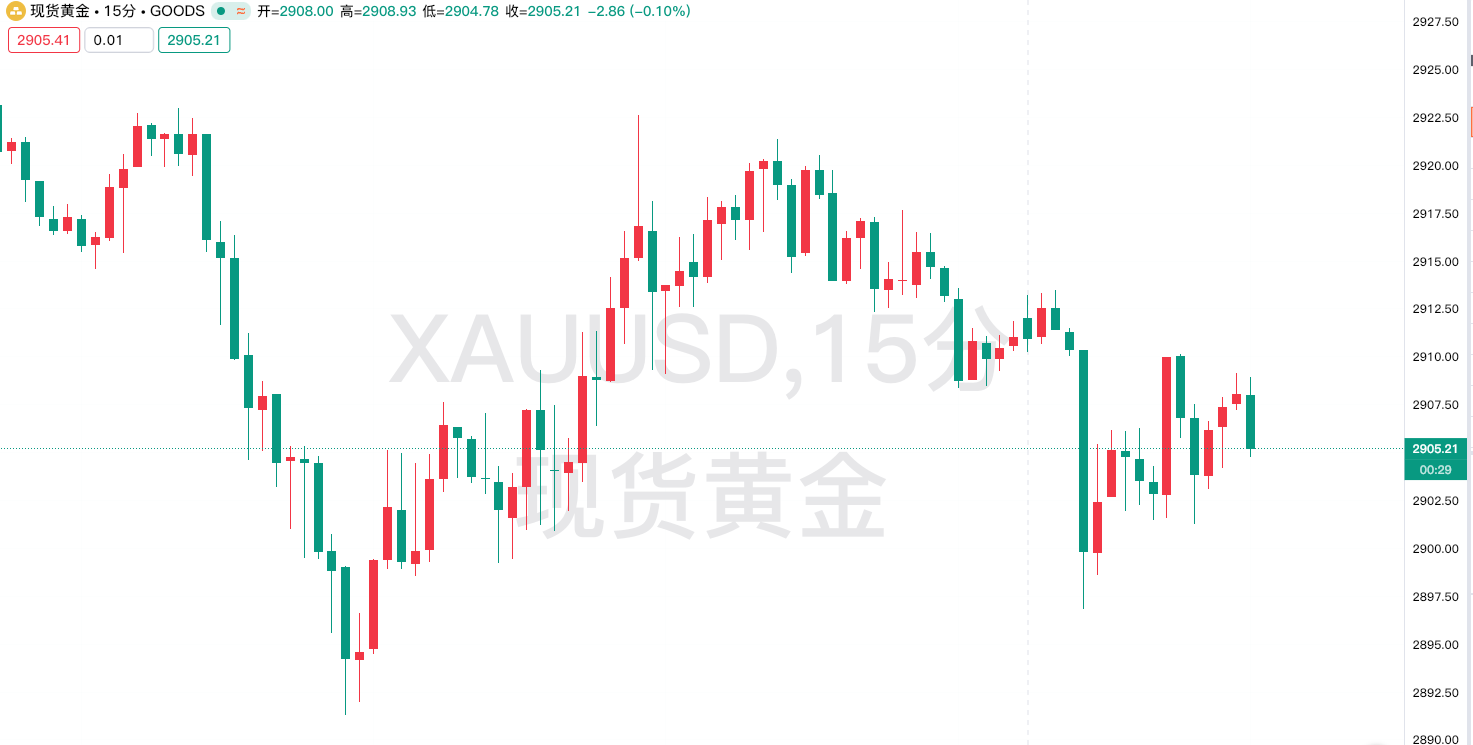
As of 11:00 Beijing time, the spot gold price is 2905.10 US dollars per ounce.


 English
  Chinese
  Vietnamese