
US February CPI data forecast: Beware of unexpected risks, gold market long short game
- March 13, 2025
- Posted by: Macro Global Markets
- Category: News

1、 Data prediction and market expectations
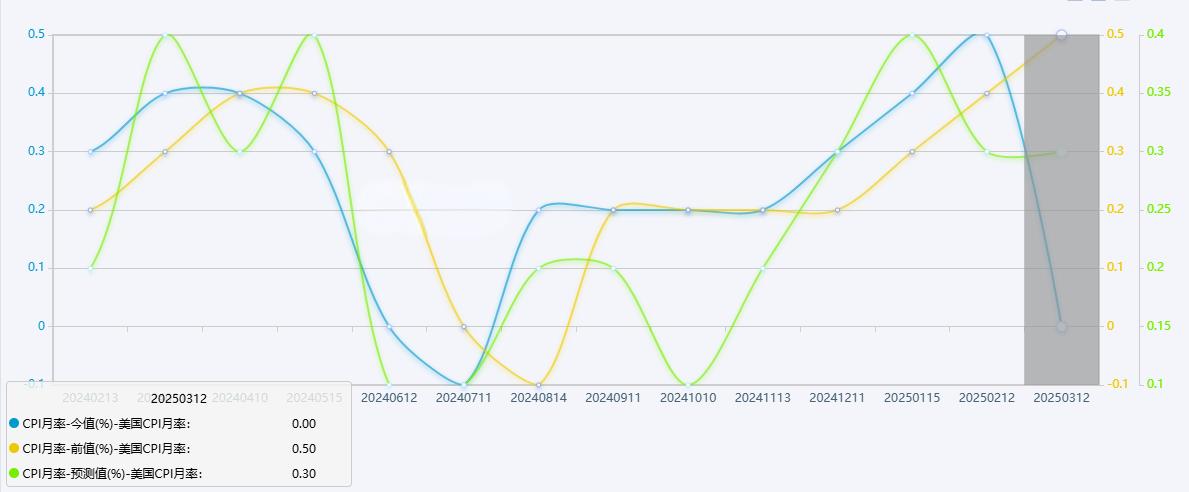
On March 12th at 20:30 Beijing time, the US Bureau of Labor Statistics will release the Consumer Price Index (CPI) for February. The market generally expects that the year-on-year growth rate of CPI in February may slightly increase from 3.1% in January to 3.2%, supported by the rebound in energy prices and housing costs. The core CPI will increase by 3.8% year-on-year, with a month on month increase of 0.4%.
However, recent high-frequency data shows that inflation stickiness exceeds expectations, coupled with Trump’s tariff policies pushing up the cost of imported goods, and there is a risk of exceeding expectations in actual data.
2、 The structural causes of inflation stickiness
Energy and food prices rebound: International oil prices rose by over 5% in February, coupled with Saudi Arabia’s extension of production cuts, resulting in a 2.3% month on month increase in energy CPI; Avian influenza has led to record high prices for eggs, while prices for meat, fruits, and other food products continue to rise.
Stubborn housing costs: In February, the housing index rose by 0.4% month on month, while the growth rate of rent and equivalent rent for homeowners remained high, contributing more than 60% of the core CPI increase.
Tariff transmission effect: The imposition of tariffs on imported goods from Asian countries has driven up prices of furniture and clothing, and the steel and aluminum tariffs that came into effect on March 1st may further increase manufacturing costs.

3、 The divergence in the Federal Reserve’s policy path intensifies
If the CPI data exceeds expectations, the market’s bet on the Federal Reserve cutting interest rates will significantly cool down. The current CME FedWatch tool shows that the probability of the first interest rate cut in June has fallen from a high of 68% to 60%. Goldman Sachs’ latest report suggests that if inflation remains above target, the Federal Reserve may postpone interest rate cuts until September, with a full year rate cut of only 50 basis points. On the contrary, if the data meets expectations, the probability of interest rate cuts in June will rebound, and the US dollar index may continue to be weak, supporting the upward trend of gold prices.
4、 The long short game in the gold market
Positive factors
Rising demand for safe haven: Geopolitical conflicts (Russia Ukraine situation, Middle East tensions) and US stock market volatility (S&P 500 index fell 8.6% in February) drove funds into gold ETFs, with retail investors increasing their holdings by 8.2 tons during the Asian session on March 12th.
Central Bank Gold Purchase Tide: In the first two months of 2025, global central banks net bought 78 tons of gold, and the People’s Bank of China increased its holdings for 15 consecutive months, with reserves accounting for 5.2%.
Real interest rate decline: The current real interest rate has dropped to -1.2%, the lowest level since 2020, enhancing the attractiveness of gold.
Negative factors
Risk of US dollar rebound: If CPI exceeds expectations and pushes up US bond yields (with 10-year yields remaining around 4.1%), the US dollar index may temporarily strengthen.
Technical pullback pressure: The daily RSI of gold prices is approaching the overbought area of 70, and there is profit taking at the key resistance level of $2930.
5、 Risk Warning
Data exceeds expectations: If the year-on-year growth rate of CPI exceeds 3.3%, it may trigger a repricing of the Federal Reserve’s policy shift in the market.
Geopolitical easing: If the US, Ukraine, and Saudi Arabia reach a long-term ceasefire agreement, the demand for safe haven may temporarily cool down.
US stock liquidity crisis: If the S&P 500 index falls below key support, it may trigger passive selling of gold.
Conclusion: Short term gold prices are dominated by CPI data and expectations of interest rate cuts. It is recommended that investors closely monitor the support of the $2900 integer level and focus on buying long on dips.
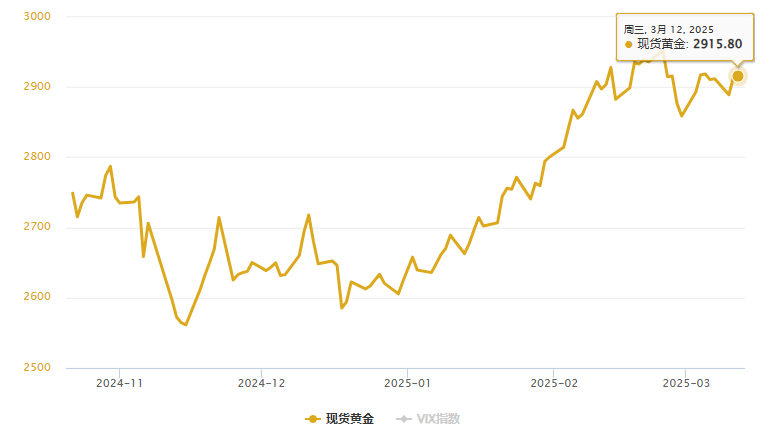
(1) If CPI is higher than expected, the expectation of Fed interest rate cuts will be postponed, US bond yields will rise, and gold prices will face short-term pressure, possibly falling below $2900 per ounce.
(2) If the CPI meets or falls below expectations, the expectation of the Federal Reserve cutting interest rates will remain, the US dollar index will weaken, and gold prices will remain above $2900 per ounce or even rise to $2930 per ounce.
Trading risk warning: Any investment carries risks, including the risk of financial loss. This suggestion does not constitute specific investment advice, and investors should make decisions based on their risk tolerance, investment goals, and market conditions.




 English
  Chinese
  Vietnamese